What Is Hydroponics, and Is It Worth Trying at Home?
No soil, but not no effort
Hydroponics means growing a plant by feeding it a nutrient solution dissolved in water instead of soil or compost. That’s the whole definition — it doesn’t specify one particular setup. University extension guidance on home hydroponics splits systems into two broad types: water-culture, where roots are suspended directly in the nutrient solution, and medium-culture, where roots grow through an inert material — rockwool and clay pebbles are common examples — that’s kept moist with the same solution. Both count as hydroponics; neither is the default.
What growing without soil isn’t, either way, is a shortcut. It removes some problems this site’s existing container-growing content deals with constantly — compost quality, drainage, how fast a specific pot dries out — but it replaces them with a different set of things to get right, not simply fewer things.
How the plant actually gets what it needs
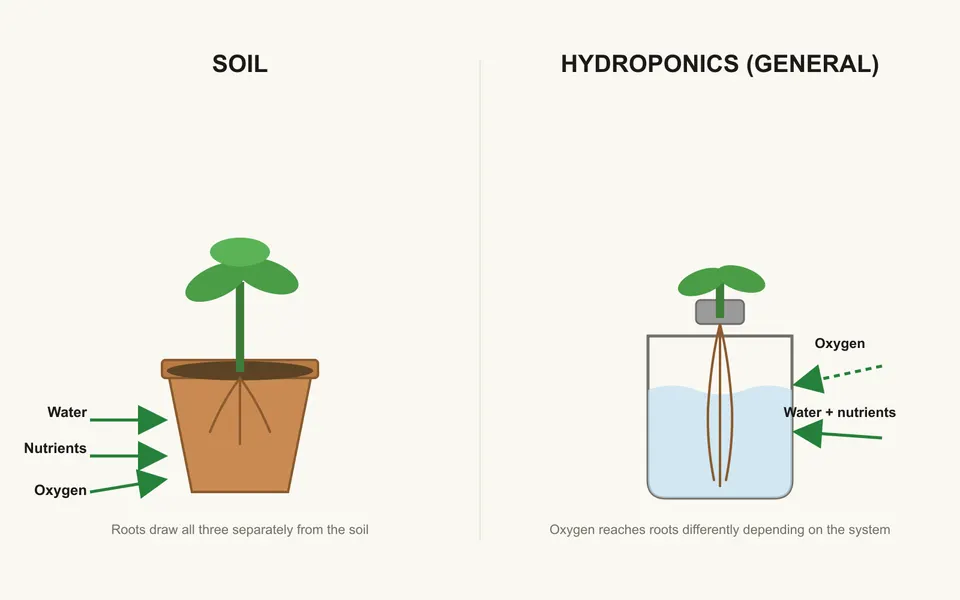
In soil, a plant’s roots pull water, dissolved nutrients, and air from the gaps between soil particles. Take the soil away, and each of those three has to be supplied deliberately:
- Water and nutrients come together, as a nutrient solution — water with dissolved mineral salts in it. A properly mixed hydroponic solution needs a balanced mix of the major nutrients a plant needs (nitrogen, phosphorus, potassium, magnesium and sulphur) plus much smaller amounts of trace elements like iron and manganese, according to the RHS’s own hydroponics guidance.
- Oxygen has to reach the roots one way or another, since roots need it just as much without soil as they do with it. Different systems solve this differently: some keep the nutrient solution actively aerated so roots submerged in it still get enough oxygen; others are built so part of the root system sits in an air gap rather than fully submerged, getting oxygen more directly. Neither approach is the only correct one — they’re different solutions to the same underlying requirement, and which a given system uses is a design choice, not a rule every hydroponic setup follows.
What actually changes, and what depends on your setup
It’s tempting to describe hydroponics as simply faster, cheaper, or less work than growing in compost — none of that holds up as a general rule. What genuinely changes is what you’re managing, not automatically how much:
- A water-culture system with no solid medium removes the need to buy or replace compost entirely. A medium-culture system doesn’t — it still uses a growing medium (rockwool, clay pebbles, and others), which still needs buying and, eventually, replacing. Different media don’t wear out or need replacing on the same schedule as each other, any more than different composts do — this varies by material and setup, not by a fixed rule.
- You’re no longer relying on a bag’s built-in feed running out unpredictably — instead you’re responsible for mixing and maintaining the nutrient solution yourself. Whether that adds up to more monitoring than a container plant needs, or about the same, depends on the specific system and how it’s built — it isn’t automatically more demanding just because it’s hydroponic.
- Growth speed and effort both depend heavily on which system you build and how well you run it, not on “hydroponics” as a category. A simple, low-maintenance setup and an actively managed one are both hydroponics, and they ask very different amounts of you.
The honest summary: what you manage changes — less dependency on a compost bag, a new dependency on the nutrient solution itself — but whether that adds up to more or less work than container growing depends on the setup, not on hydroponics as a category.
Space and light — it depends on your setup, not a fixed rule
How much space you need depends entirely on which system and which crop — a single jar-based setup for a windowsill herb and a full growing rack are both “hydroponics,” and they ask for completely different amounts of room. The same is true of light: how much a hydroponic plant needs depends on the crop itself, where you’re growing it, the time of year, and whether you’re relying on a window or supplementing with a grow light. University extension guidance on home hydroponics is consistent on one point without giving a single universal number: supplemental lighting is often needed for an indoor setup, because a windowsill alone doesn’t reliably give every crop, in every season, enough of what it needs. Exactly how much depends on what you’re growing and where.
Equipment and maintenance, at a high level
Every hydroponic system needs, at minimum: something to hold the nutrient solution, something to support the plant so its roots can reach it, and a way to keep those roots adequately supplied with oxygen. Beyond that minimum, systems range from genuinely simple — no pump, no electricity, no moving parts — to actively pumped and monitored setups, and which end of that range suits you is a separate decision from whether to try hydroponics at all. A full comparison of beginner-realistic systems is planned as a follow-up to this piece.
Ongoing maintenance means periodically checking the nutrient solution — its nutrient balance and its acidity both drift over time and need occasional correcting. How often that needs doing varies by system and crop, and isn’t something this introductory piece can honestly reduce to one number; a future practical guide is a better place for that detail than a general overview.
A decision framework, not a verdict
Rather than a blanket “is it worth it,” it’s more useful to be honest with yourself about four things:
- Space — how much room can you realistically give a setup, and does that suit a small jar-based system or something bigger?
- Light — does your space get enough natural light for what you’d want to grow, or would you need to supplement it?
- Willingness to maintain a system — are you looking for something closer to “set up and mostly leave,” or are you happy checking and adjusting a solution regularly?
- Soil vs. soilless preference — is the appeal genuinely “no compost,” or is it curiosity about a different method? Both are valid reasons, but they point toward different answers.
You don’t need to own any equipment to work through these — this is a “should I look into this further” article, not a shopping list.
This piece is based on the cited RHS and university extension research below, not on No Garden Required actually growing anything hydroponically or testing any equipment.
Where to go from here
If you’re still deciding, Getting Started covers the site’s existing, established route into growing food in a small UK space — container growing, not soilless — and is worth reading either way. If hydroponics genuinely interests you after thinking through the questions above, a comparison of beginner-realistic systems and a look at which crops are actually worth starting with are both part of this same collection.
Sources and further reading
Hydroponics Gardening — RHS Advice
Hydroponics: A Brief Guide to Growing Food Without Soil — University of Nevada, Reno Extension
Growing Without Soil: Getting Started with Hydroponics at Home — University of Illinois Extension
Just getting started? A straight, checked PDF guide for your space is coming — see what’s coming.
Related articles
Cut-and-Come-Again Salad: What to Actually Expect
It's genuinely one of the best first crops for a small space — but the regrowth slows with each cut, and nobody mentions that part.
26 Apr 2026
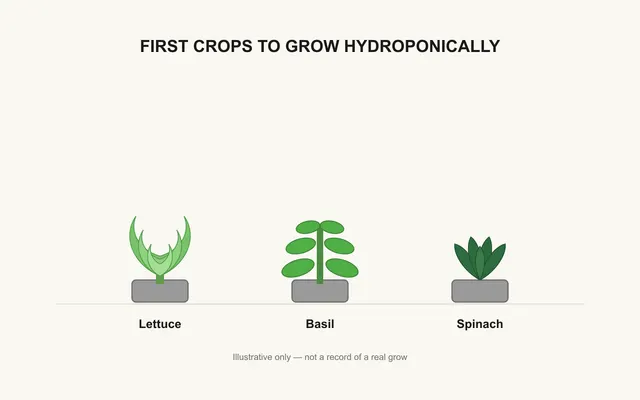
First Crops to Grow Hydroponically: A Beginner's Guide
A short, source-backed shortlist — not a long one borrowed from commercial sites. What's directly documented, what's a general recommendation, and what's still genuinely unresolved.
20 Sept 2026
Full Sun vs Partial Shade: What It Costs a Tomato Plant
Tomatoes don't just grow slower in partial shade — the whole plant's behaviour changes, and it's usually fixable-ish, not fatal.
27 Apr 2026