Full Sun vs Partial Shade: What It Costs a Tomato Plant
Why this matters more for tomatoes than most crops
I’ve grown tomatoes in both full sun and partial shade often enough over the years to see this play out directly: they’re fruiting crops, and fruit production is directly fuelled by photosynthesis — the plant converts light into the sugars that build fruit, not just leaf growth. This makes tomatoes noticeably more light-sensitive than leafy crops like lettuce or herbs, where the harvested part is the leaf, and slower growth in lower light is a less dramatic problem.
What actually changes in partial shade, specifically
Flowering and fruit set slow down and reduce, since the plant has less surplus energy to put toward reproduction once its basic growth needs are met — this is usually the first and most noticeable effect, often before overall plant size looks obviously different.
Growth becomes leggier. A tomato plant reaching for more light typically grows taller and more sparse between leaves than the same variety in full sun, putting energy into stretching toward light rather than into a compact, productive structure.
Fruit ripens more slowly, and in a UK growing season that’s already borderline in length for tomatoes outdoors, this can mean a meaningfully shorter effective harvest window before autumn ends the season, even if the plant eventually produces a reasonable amount of fruit.
Fruit flavour is generally milder. Sugar development in tomato fruit is genuinely light-dependent, and tomatoes grown in consistently lower light tend to taste less sweet and less intense than the same variety grown in full sun, independent of variety choice.
What “partial shade” means for tomatoes in practice
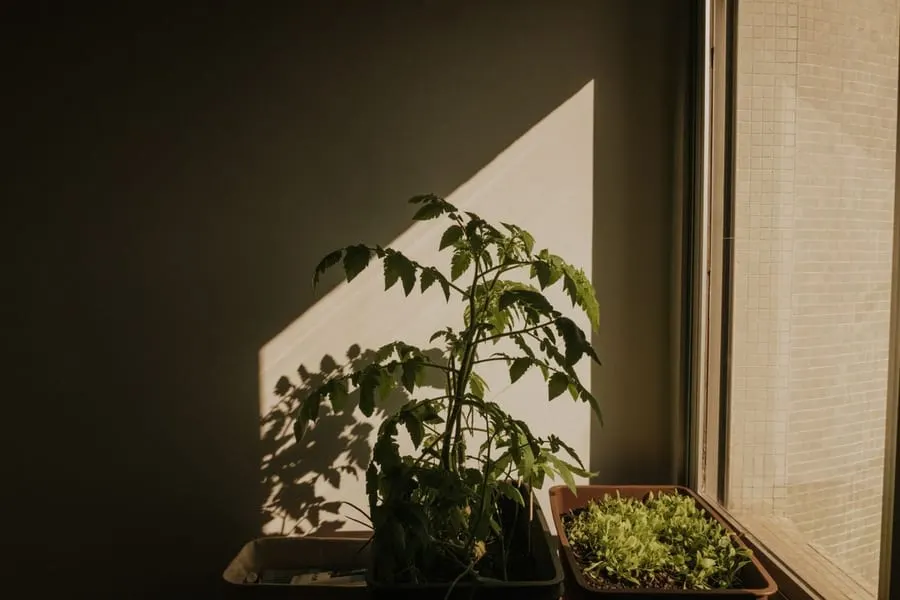
Tomatoes are usually described as needing 6+ hours of direct sun for good fruiting. Below that — say, 3–5 hours, which is realistic for many UK balconies with some obstruction — expect a real, visible reduction in fruit quantity and ripening speed, not a plant that simply “does fine but a bit slower.” Below roughly 3 hours of direct sun, tomatoes are a poor match for the space, and effort is usually better spent on a shade-tolerant crop (see the north-facing balcony guide) than fighting the light available.
Is there anything that closes the gap?
Reflective surfaces (pale walls, light-coloured surfaces near the plant) can meaningfully boost the effective light a partially shaded spot receives. Choosing a faster-maturing, smaller-fruited variety (cherry tomatoes generally ripen faster than large beefsteak types) also reduces how much the shorter effective season costs in practice. Neither fully replaces direct sun, but both genuinely help make a marginal spot more workable.
Shade costs more than speed
My takeaway, from growing the same varieties in both conditions rather than just reading about it: partial shade doesn’t just mean “slower” for tomatoes — it changes fruit set, ripening speed, and flavour in ways that compound across a UK-length growing season. It’s not necessarily worth abandoning a tomato plant in a 4-hour-sun spot, but it’s worth setting realistic expectations rather than assuming the only difference is a bit less vigour.
Just getting started? A straight, checked PDF guide for your space is coming — see what’s coming.