
Leeks: Why Yours Might Be All Green and No White
The problem this actually solves
A lot of home-grown leeks come out short, thick and mostly green — technically fine to eat, but not the long white-shanked leek people picture. I grew exactly that kind of leek myself before working out why. That’s not a variety problem or a soil problem. It’s almost always down to how deep the leek went in at transplanting, and it’s decided in about thirty seconds of planting, not fixable afterwards.
Deep planting is the actual mechanism
The white shank (the base) forms because that part of the plant is kept away from light. Deep planting is what helps leeks form the long white shank in the first place — the standard method is to drop each young leek into a deep dibbed hole (traditionally around 15–20cm) and simply water it in, rather than backfilling with soil. The hole fills in naturally over subsequent waterings, gradually excluding light from more of the stem as it grows.
On top of that, earthing up — drawing soil or compost up around the base as the plant grows, done more than once through the season — extends the blanched section further. Skip both steps and you get a leek that grew perfectly well, just mostly in the light, which is why it stays green low down.
Spacing, because it matters for stem thickness too
Full-sized leeks want 15–20cm between plants with 30cm between rows; for baby leeks specifically, 10cm spacing is enough. Crowd them tighter than that and stems come out thin regardless of blanching.
Can this work in a container?
Yes, within limits. A pot around 40cm wide can realistically hold four or five mature leeks. But leeks are still better suited to open ground than most crops on this site’s Grow Finder, and container leeks need noticeably more consistent watering than ground-grown ones, since there’s no surrounding soil moisture to draw on.
Timing and the one thing not to miss
Sow leeks in spring (March–April) for an autumn/winter harvest, with baby leeks ready in about 2 months and full-sized leeks taking around 6 months. Late-sown varieties can be left in the ground through winter into spring. The one thing worth watching for: if a leek sends up a flower stalk, remove it promptly — left alone, it makes the centre of the leek fibrous and unpleasant to eat.
Depth decides it, not variety
Leeks aren’t difficult, but the white-shank result people expect isn’t automatic — it’s earned by planting deep and earthing up, not by luck of variety. Get the depth right at transplant and, in my experience, this is a genuinely low-maintenance crop for the rest of the season.
Sources
Just getting started? A straight, checked PDF guide for your space is coming — see what’s coming.
Related articles
Asparagus: Is a Three-Year Wait Actually Worth It?
No harvest at all for the first two years, a permanent bed for two decades after that — asparagus asks for more commitment upfront than almost anything else on this list.
28 Apr 2026
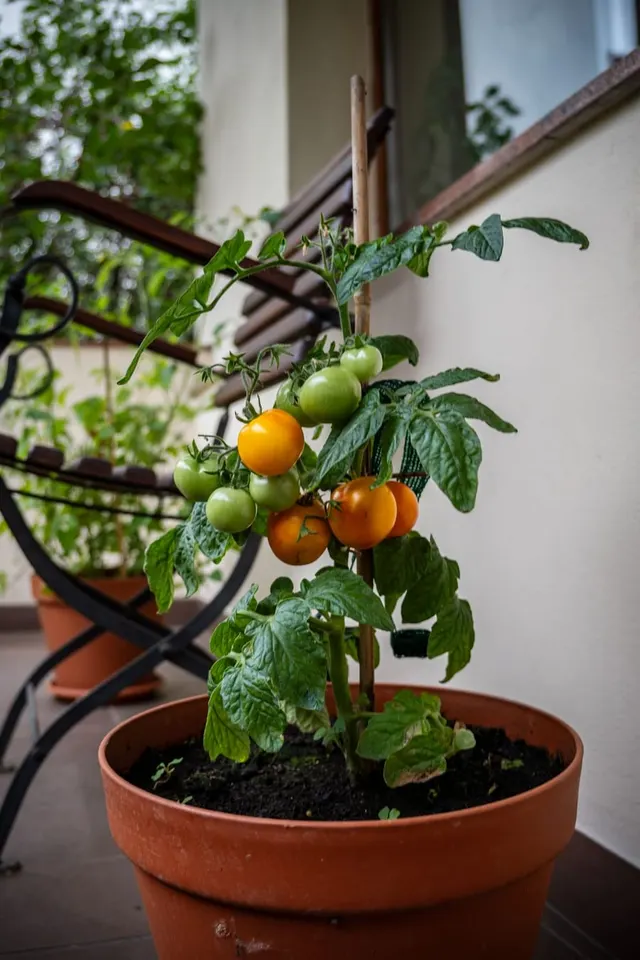
Best Containers for Growing Tomatoes on a UK Balcony
Bigger is better, but only up to a point — what actually matters is depth, drainage and how often you're willing to water.
1 Mar 2026
The Best Patio Containers for Root Vegetables
Root vegetables are the one category where container choice genuinely changes the crop, not just the convenience — and depth is doing more work than width.
7 Aug 2026