
Does Copper Tape Actually Stop Slugs?
A deterrent repeated everywhere, tested nowhere
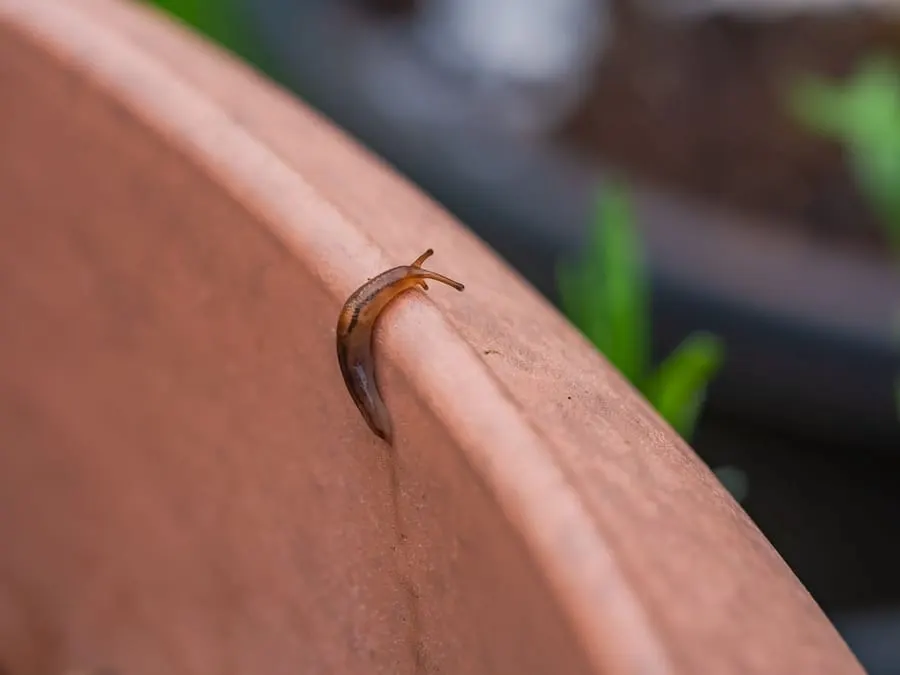
Copper tape around a pot rim is one of the most repeated slug deterrents in gardening content — the idea being that slugs get a mild electrical reaction crossing copper and avoid it. It’s sold everywhere and recommended constantly, and I’ve tried it myself on my own containers more than once with disappointing results — which is what sent me looking for whether it actually holds up in a real garden, rather than just repeating it.
What the actual evidence says
This is a rare case where there’s a direct, real answer rather than “it depends”: the RHS ran a controlled trial specifically testing copper barriers against slug damage in realistic garden conditions, and found no measurable reduction in leaf damage over a six-week period. That’s not a small or casual result — it’s a dedicated horticultural institution testing the exact claim under real conditions.
At the same time, some laboratory studies have shown copper barriers do have a genuine, measurable repellent effect on slugs under controlled conditions. Both findings are real. The gap between them is the practical detail: lab conditions (clean copper, controlled humidity, no debris) don’t match a real balcony, where copper tape gets dirty, wet, covered in compost splash, or bridged by a leaf touching the rim — any of which can let slugs cross without contact.
What this means for a UK balcony
My honest conclusion, given the RHS’s real-world result and matching what I saw in my own containers, is that copper tape is unreliable as a standalone barrier in practical container growing conditions. It isn’t necessarily useless in a lab, but “works in a lab” and “protects your seedlings on a balcony” are different claims, and only the second one is the one that matters here.
What’s actually worth doing instead
- Protect the vulnerable stage. Seedlings and soft new growth are what slugs do the most damage to, fastest — established plants tolerate grazing far better. Prioritise protection when plants are small.
- Remove daytime hiding spots around containers — pots sitting directly on damp surfaces, plant saucers, dense mulch right against the stem — since slugs shelter there during the day and feed at night.
- Barrier methods with better evidence, like wool pellets or grit, and biological controls like nematodes, have more consistent real-world results than copper for slugs specifically — worth trying before or alongside copper rather than relying on copper alone.
- Hand-picking after dark, with a torch, remains one of the most reliably effective methods for a small number of containers — unglamorous, but it directly removes the actual slugs rather than hoping a barrier holds.
Slugs aren’t the only container pest worth checking the evidence on before reaching for a spray.
Sources
Just getting started? A straight, checked PDF guide for your space is coming — see what’s coming.
Related articles

Do Companion Plants Actually Deter Pests on a Small Balcony?
The evidence is real for some specific pairings and genuinely thin for others — companion planting isn't one claim, it's dozens of different ones.
25 Apr 2026
Do Flowers Actually Help Your Vegetable Garden?
For fruiting crops, more pollinator visits genuinely means more fruit — a few flowers worked in among the vegetables isn't just a pretty extra.
29 May 2026